原标题:海南省三亚市解除中心城区部分片区临时静态管理央广网三亚9月13日消息(记者 蔡文娟)三亚市新型冠状病毒肺炎疫情防控工作指挥部发布通告,自9月13日12时起,解除中心城区部分片区临时静态管理。解除范围包括:天涯区海虹路以西片区(马岭以东、海虹路以西、G98绕城高速以南、南至海边,除金和通建材批发市场、桶井村凤凰三小组外);新联-妙林-槟榔片区;凤凰岛片区;吉阳区东部片区(自榆亚路鹿岭路口沿狗岭山脊线往北延伸至学院路以东,G98绕城高速以南,竹络岭隧道以西,南至海边,除干沟村建材厂宿舍区外)。
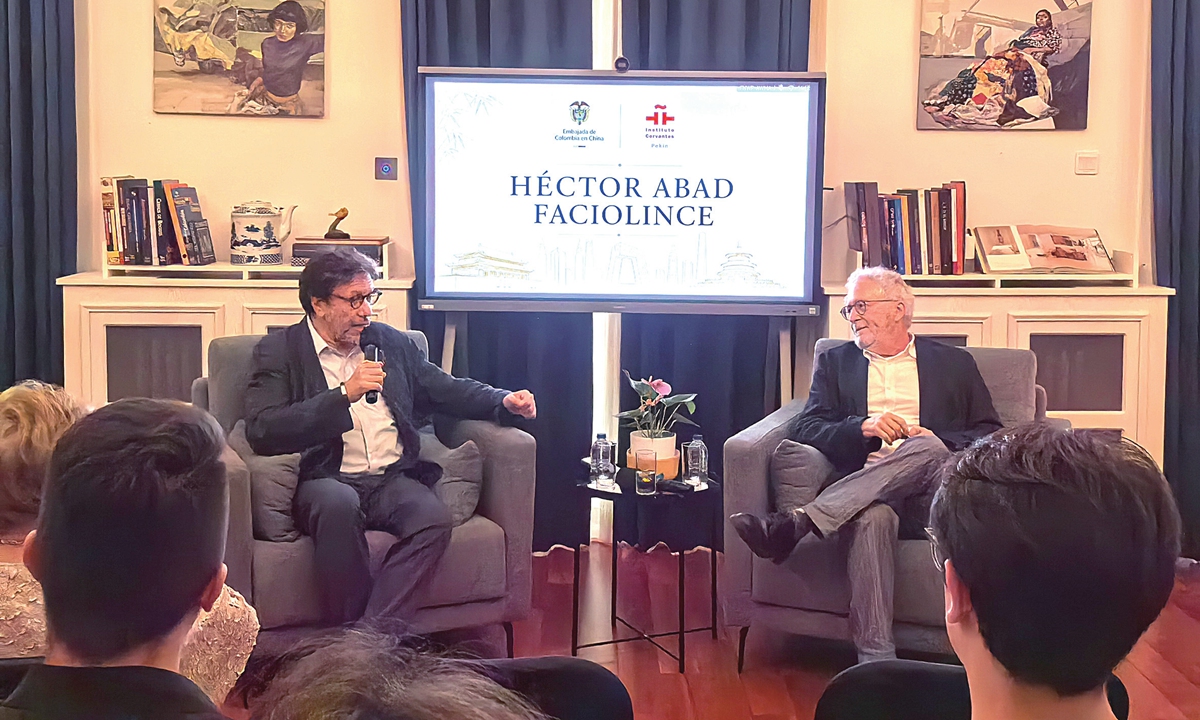
Santiago Gamboa, writer and minister counselor of the Embassy of Colombia in China, (left) and Héctor Abad Faciolince, a Colombian novelist, writer and journalist at a sharing session at the Embassy of the Republic of Colombia in China on August 18, 2026. Photo: Dong Feng/GT
The Embassy of the Republic of Colombia in China hosted a colloquium with Héctor Abad Faciolince, a Colombian novelist, writer and journalist. The writer shared on Tuesday his growth journey from a journalist to achieve his dream as a writer, his observation of the Colombian society and his impression about the changes in China.
In a fully packed hall, Minister Plenipotentiary Jose Fernando Bermúdez Cendales said in his opening remarks that the event is part of an initiative to bring Colombian culture closer to the Chinese public while simultaneously creating new spaces for dialogue and exchange between the two countries.
Bermúdez said that Abad's visit to China offers a particularly valuable opportunity to showcase the richness of our literature and to strengthen the cultural and human bridges connecting Colombia and China.
The session, chaired by Santiago Gamboa, writer and minister counselor of the Colombian Embassy, focused on the career and body of work of Abad and in particular,
El olvido que seremos (Oblivion: A Memoir).
Abad's book is a seminal work of contemporary Colombian literature in which personal and family memory engage deeply with Colombia's recent history. Its translation into Chinese allows this story to reach new readers and represents an extraordinary opportunity to bring both societies closer together through literature, per some commentators.
"We hope this gathering will be an open conversation among cultures, readers, and experiences, and a new expression of the friendship that Colombia and China continue to build," said Bermúdez.
Abad, one of the most important voices in contemporary Latin American literature, shared with the Global Times that this is his second trip in China. The last time he visited the country was two decades ago.
This time, in his eyes, China has changed a lot. In many ways, the country stands for the future of the world.
Abad said he is surprised to see how much Chinese people are depending on the electric devices and network to communicate in a virtual world, and said that he felt "like an alien."
Talking about his interaction with readers in Shanghai, Abad smiled, saying that the readers selected some phrases from his book and asked him to write down as part of the autography and signature for them.
In his book,
El Olvido Que Seremos (The Oblivion We Will Be), which is acclaimed as a "love letter from a son to his father," is not only a deeply affectionate look back at familial bonds but also a courageous attempt to defy oblivion.
Rooted in true events,
The Oblivion We Will Be chronicles the life of his own father. Abad noted that his father was killed in August 1987 - nearly forty years ago.
In the Western literary tradition, a father is often portrayed as a distant or even negative figure. His father, however, was "totally different - a man of love and deep sense of responsibility in both the public sphere and his family life."
Such image of a benevolent, non-authoritarian father has impressed his Chinese readers as well, he said.
As a physician, Abad's father dedicated his life to addressing fundamental issues affecting people's well-being, such as drinking water quality and public health, steadfast in the belief that the world could be made better through action.
Abad's work addresses themes such as memory, violence, inequality, and the human condition, deeply marked by the murder of his father, an event that inspired his most iconic book, The Oblivion We Will Be was published in Chinese by Writer's Publishing House in Beijing in July.
。(中心城区解除临时静态管理片区示意图)以上范围解除临时静态管理后,将恢复农业等生产活动,开放超市、商场、理发店、餐馆(不开放堂食)等经营场所,开放室外公共场所,准予快递、外卖运营,私家车、出租车、网约车等正常通行。影院、酒吧、KTV、网吧、棋牌室等室内密闭经营场所,以及农贸市场、渔业生产暂不开放。
返回搜狐,查看更多责任编辑:


 12.4万亿元!一组数据看我国民生投入不断加大,12.4万亿元!一组数据看我国民生投入不断加大
 全球周转最快,福州港如何做到?
 仅为显示Bug:初代AirPods Pro移除自适应通透模式
 全区总河长会、林长会暨防汛抗旱工作会议召开
 哈默·罗永浩在接受电影《燃点》采访时说:“拍完这部电影后,公司发生了一起事故。”
 中企退出罗马尼亚光伏园公共采购投标,欧盟中国商会:欧委会滥用《外国补贴条例》调查
查看所有0条评论>>